Can you build a baby with AI?
If you searched for “build a baby” or “build an AI baby,” you may have encountered very different things: generated baby pictures, AI-assisted IVF, artificial wombs, or gene editing. They are not interchangeable.
Build AI Baby is an independent Christian film and reflection project. We explain research and offer free prayer and conversation. We do not provide fertility treatment or a baby-building service.
Editorial overview by Build AI Baby · Updated October 18, 2026 (Pacific). This is educational writing, not a clinical review. Dates of scientific sources are identified below.
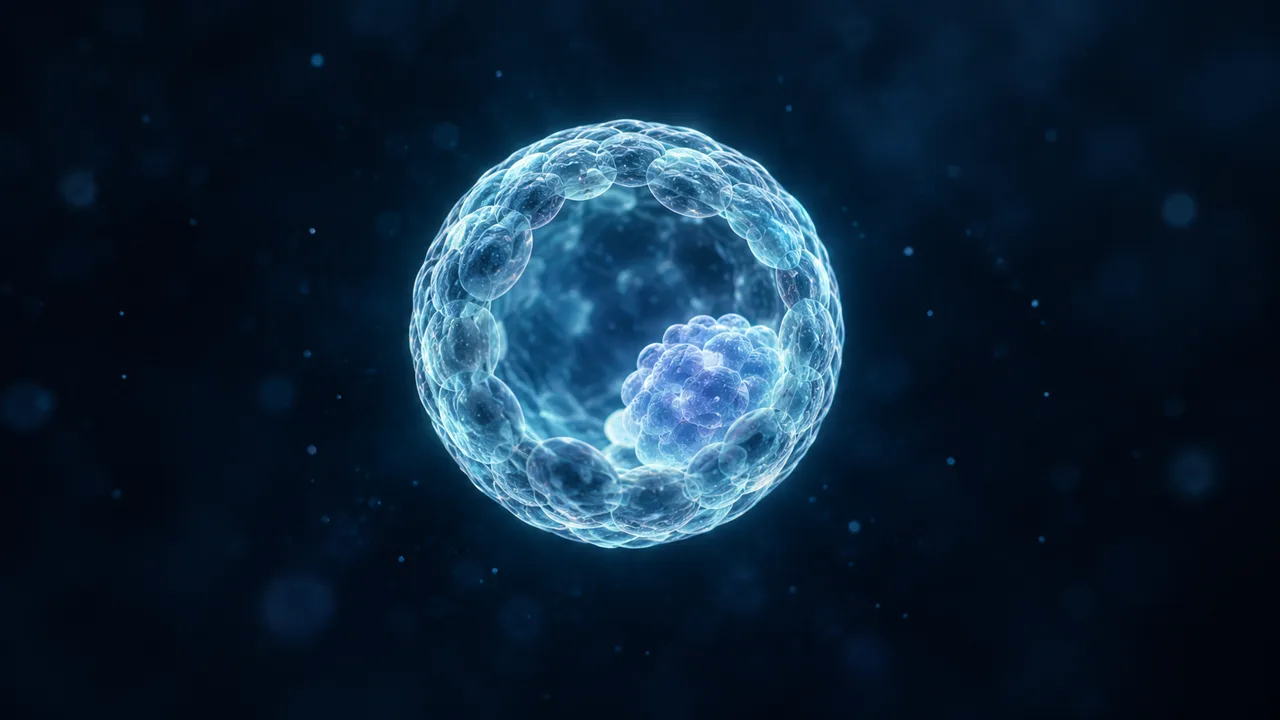
What is an AI baby?
“AI baby” is an informal phrase, not a single medical diagnosis or procedure. A baby picture generator creates a digital image. An IVF algorithm analyzes information about embryos. An artificial womb device aims to support development. A gene-editing tool changes DNA. Ask which specific technology a headline means before judging its claims.
A generated picture is not an embryo. Using AI to assess an embryo does not mean AI created the child, and it does not change the child's human worth.
How is AI used in IVF and embryo selection?
In vitro fertilization (IVF) involves fertilization outside the body. Some systems use time-lapse images and automated analysis to assist assessment of embryos. Ranking embryos is a selection task; it is not the same as editing their DNA.
The UK's fertility regulator, the HFEA, assesses time-lapse imaging and incubation as a treatment add-on. It reports no improvement in the chance of a baby for most patients from automated time-lapse analysis. That assessment should not be generalized to every AI system or every stage of IVF. Read the regulator's explanation [1].
What are the risks of AI embryo selection?
First distinguish a proven harm, a limitation in evidence, and a theoretical concern. For time-lapse imaging and incubation, the HFEA reports no additional known risks for patients or resulting children. That is not a universal safety guarantee for all reproductive technology.
Ask a clinic which tool it uses, whether independent studies measured live births in patients like you, how an embryologist reviews its recommendations, and what additional cost it involves. A strong prediction score alone does not answer whether an add-on improves your outcome. Compare the source-linked research summaries.
Can a baby grow in an artificial womb?
Distinguish supporting an extremely premature infant from a complete pregnancy outside the body. The FDA's September 2023 advisory discussion addressed devices intended for extremely premature infants and the evidence needed for first-in-human studies. It did not establish conception-to-birth pregnancy as an available service. Read the meeting scope [2].
A widely discussed 2017 animal study supported premature lambs in an extra-uterine system. An animal experiment is not proof of long-term human safety. For a named device, check current clinical-trial and regulatory records rather than assuming an old article establishes today's approval status. Read the original study [3].
Is embryo selection the same as a designer baby?
No. Choosing among embryos and changing an embryo's DNA are different interventions. “Designer baby” is an imprecise label; identify whether a claim concerns screening, ranking, or heritable editing.
Our research section links to laboratory findings about unintended chromosome loss after Cas9 editing and WHO guidance on human genome editing. Those findings must not be presented as evidence that every child conceived through IVF has been edited or harmed. Explore gene editing evidence and its limits.
How can I check an AI baby claim or video?
- Identify the named device, institution, researchers, and original publication.
- Check whether it shows an illustration, animation, animal experiment, or documented human treatment.
- Look for the publication date, study population, comparison group, and measured outcome.
- Separate an ethical or religious opinion from a claim established by clinical evidence.
- Check regulatory status for that specific product; a promotional video is not approval.
This is a way to examine evidence, not a claim that we have authenticated a particular video or performed a forensic investigation.
Family planning involves more than technology.
Our Christian perspective makes room for questions about commitment, responsibility, infertility, adoption, and hope. You can read the research without watching the film, and every conversation and prayer request is freely offered.
Watch the introductionFree prayer & conversationRead the original sources.
- HFEA: Time-lapse imaging and incubation — regulator assessment; accessed October 18, 2026.
- FDA: Pediatric Advisory Committee meeting, September 19, 2023 — intended use and scope of artificial womb discussion.
- Nature Communications: An extra-uterine system to physiologically support the extreme premature lamb (2017) — original animal study.
More original sources: human-embryo gene editing and WHO recommendations ↗